
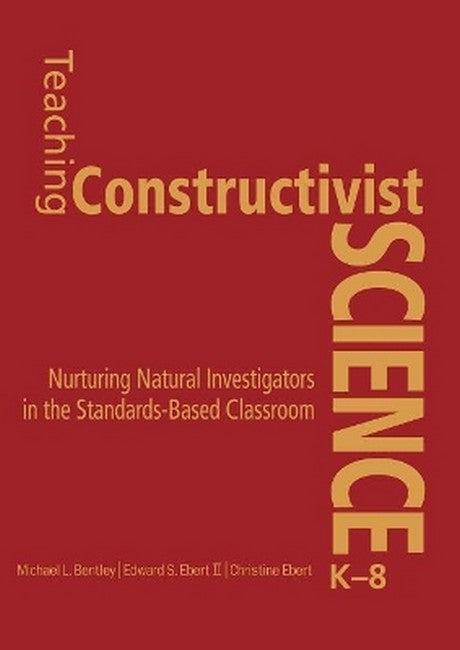
Michael Bentley is an Associate Professor of Science Education at the University of Tennessee, Knoxville, where he teaches courses in environmental education and methods of teaching K-8 science. He has written science books for young readers as well as curriculum materials and numerous professional articles and chapters in books. He has also been involved with the creation of several innovative schools and has been an officer on two school boards. Bentley's interests include teacher education, the public understanding of science, curriculum studies and international education, and the history, philosophy, and sociology of science as applied to science education. Edward S. Ebert, II is Professor Emeritus of Education at Coker College in Hartsville, South Carolina and an award winning educator. With a degree in Psychological Foundations of Education, he has taught courses in educational psychology, elementary science methods, child development, classroom management, assessment, and creative problem solving. He as written a dozen books, including elementary science methods (Teaching Constructivist Science, K-8/Corwin Press), creative thinking and science teaching, introduction to education, classroom pragmatics: management and assessment (The Educator's Field Guide/Corwin Press), and an examination of public education in the American culture. Ebert has given numerous presentations nationally and internationally, and has taught science education and educational psychology for a semester at Shanghai International Studies University, Shanghai, P.R. China. He now resides in Wellfleet, MA, where he continues to publish educational materials and serves on a regional school board. Christine Ebert is Associate Provost, Dean of the Graduate School, and Professor of Science Education at the University of South Carolina. Her work in science education focuses on conceptual change and development in students' understanding of science principles. In addition she has taught courses in thinking and reasoning, and is extensively involved with collaboration between elementary schools and the university. Ebert serves regularly as a program evaluator for national federally funded science initiatives. She has co-authored three other books related to science education and conceptual development. Ebert has presented her work on science education and creative thinking at conferences across the country and around the world.

Request Academic Copy
Please copy the ISBN for submitting review copy form
Description
List of Figures List of Tables List of Activities About the Authors Preface Acknowledgments Part I. Foundations for Teaching Science 1. The World of the Scientist and the Nature of Science 2. The Content of K-8 Science 3. Characteristics of the Science Learner: Development in Childhood and Adolescence Part II. Teaching Children Science: Approaches and Strategies 4. Developing the Classroom Curriculum 5. Engaging Students in Inquiry: Skills and Investigative Techniques 6. Designing Science Lessons for All: Differentiating Instruction 7. Making Real-World Connections Part III. Planning, Management, Assessment, and Resources 8. Nuts and Bolts: Organizing and Managing the Classroom for Inquiry 9. Assessment and Evaluation 10. A Compendium of Resources A Professional Development Bibliography References Index