
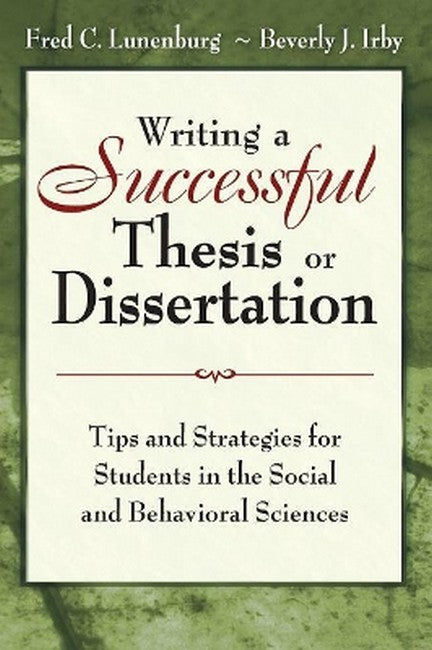
Fred C. Lunenburg is Jimmy N. Merchant Professor of Education at Sam Houston State University. Previously, he was on the faculty of educational administration at the University of Louisville, Loyola University Chicago, and Southern Utah University, where he also served as Dean of the College of Education. In addition, he has held public school positions as a high school English teacher and reading specialist, high school assistant principal, high school principal, and superintendent of schools. Dr. Lunenburg's scholarship includes 45 books, 15 book chapters, and over 200 articles published in both practitioner and academic/research journals. Beverly J. Irby, Ed.D. is Associate Professor of Educational Leadership in the Department of Educational Leadership and Counseling at Sam Houston State University. She has also served as Director of Field Experiences, Supervisor of Mentor Services, Liaison for Sam Houston State University's Urban Professional Development Site, and as a Title VII Grants Coordinator at an urban elementary school. She has published widely, authored or co-authored numerous grants, and consulted frequently with school districts.

Request Academic Copy
Please copy the ISBN for submitting review copy form
Description
Preface About the Authors Part I. Getting Started 1. Selecting a Suitable Topic Sources of Topics Criteria for Topic Selection Summary 2. Selecting a Chair and Committee Criteria to Consider in Selecting a Chair Composition and Role of the Committee Research Prospective Committee Members The Desirable Student Summary Part II. What You Need to Know 3. Quantitative Research Designs Descriptive Research Correlational Research Causal-Comparative Research Quasi-Experimental Research Experimental Research Theory Development Summary 4. Basic Statistics Descriptive Statistics Inferential Statistics Summary 5. Qualitative Research Designs Phenomenological Research Case Study Research Ethnographic Research Grounded Theory Research Mixed Method Research Summary Part III. The Dissertation Chapters 6. Writing the Introduction Chapter Background of the Study Statement of the Problem Purpose of the Study Significance of the Study Definition of Terms Theoretical Framework Models Research Questions (or Hypotheses) Limitations Delimitations Assumptions Organization of the Study Summary 7. Writing the Literature Review Chapter Searching the Literature Writing the Literature Review Synthesizing the Literature Summary 8. Writing the Methodology Chapter Introduction Selection of Participants Instrumentation Data Collection Data Analysis Summary Conclusion 9. Writing the Results Chapter Introduction Descriptive Statistics Testing the Research Questions (Hypotheses) Additional Analyses Summary Conclusion 10. Writing the Discussion Chapter Summary Discussion Implications for Practice Recommendations for Further Research Conclusions Summary Part IV. The Defense and Afterward 11. The Proposal and Final Defense Prepare a Well-Written Document Know the Format Prepare Your Presentation Practice Your Presentation Anticipate Questions Final Oral Defense Tips on How to Avoid Common Mistakes Summary 12. Publishing Your Dissertation Presentations Job Interview Academic Journals Books Chapters in Books Popular Press Internet Publishing Desktop Publishing Planning the Writing Process Summary Appendix A: Initial Letter to Participants Appendix B: First Follow-up Letter to Participants Appendix C: Second Follow-up Letter to Participants Appendix D: Dissertation Proposal Outline (Correlational) Appendix E: Dissertation Proposal Outline (Analysis of Variance) Appendix F: Dissertation Proposal Outline (Multivariate Analysis of Variance) Appendix G: Dissertation Proposal Outline (Qualitative) Appendix H: The Qualitative Research Critique Appendix I: Agreement: Guidelines for Chairing a Dissertation Appendix J: Checklist for Dissertation Quality References Index